Stop Paying Twice for Community Electric Golf Cart Fleets
For large residential communities, resorts, schools, and tourist attractions, electric carts quickly become daily infrastructure. That’s why, as a dedicated Golf Cart China Factory, we believe the smartest sourcing decision is rarely just about the lowest unit price—it’s how well the fleet holds up across a planned 5–10 year budget. A clear electric golf cart lifecycle cost view helps you turn configuration choices into predictable uptime and purchasing discipline.

A Practical 5–10 Year TCO Framework
A community fleet’s golf cart total cost of ownership can be effectively organized into six cost blocks:
- Purchase (unit price and configuration)
- Batteries
- Charging (infrastructure and electricity)
- Maintenance and spare parts
- Downtime (lost availability)
- Resale or decommissioning
Two simple, repeatable calculations keep comparisons consistent:
- Annualized vehicle CAPEX = purchase price ÷ expected useful years
- Annual battery cost = (battery price × replacements over 5–10 years) ÷ years
Using “cost per vehicle-year” (or “cost per available operating hour”) makes electric golf cart lifecycle cost discussions more actionable than simple sticker-price debates.
Batteries and Charging Habits Shape Real Operating Cost
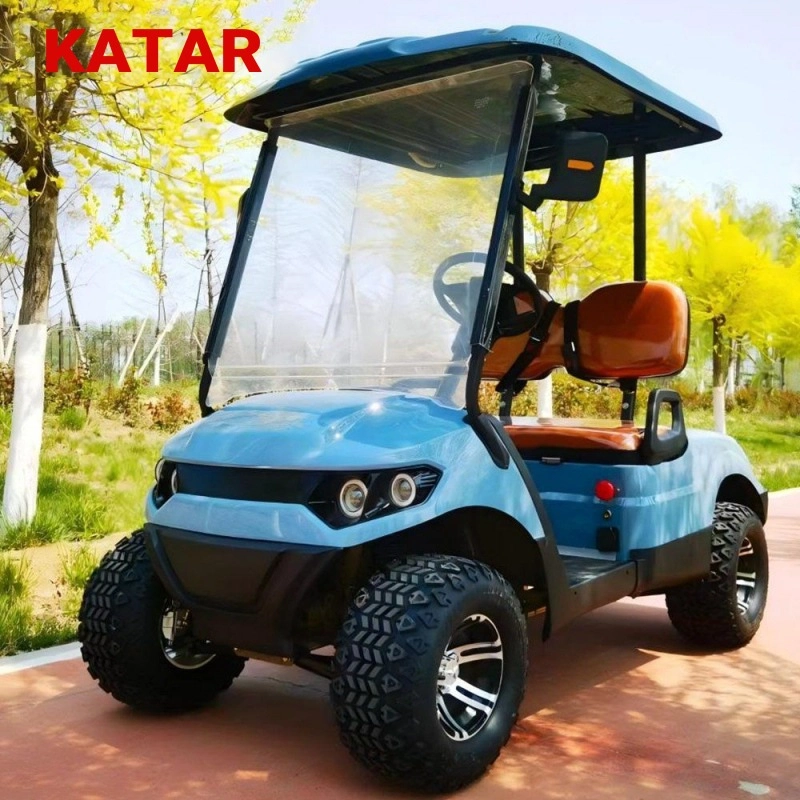
Our 2-seater electric golf cart configuration includes a Chaowi lead-acid battery 72V100A+, a 4000w Depuda motor, and an Inbol controller. For many fleets, this provides a stable baseline for planning golf cart battery replacement cost inside the larger golf cart total cost of ownership.
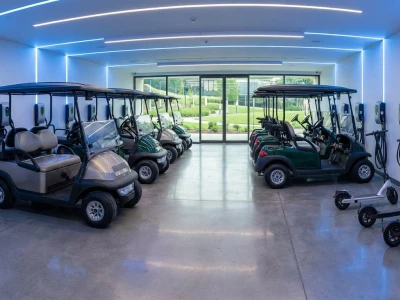
Daily charging discipline matters just as much as battery chemistry. Standardizing chargers, setting up safe and ventilated charging areas, and following consistent checks can reduce avoidable downtime and keep electric golf cart maintenance costs predictable.
What to Audit Before Shipment from Our Factory
At KATAR (Luanqi Intelligent Technology), we follow a standardized workflow: raw material inspection and traceability, CNC machining, robotic welding and stress relief, assembly line integration, full-machine performance and safety testing, customer trial operations, and 100% outgoing inspection with export packing.
When sourcing from us, you can verify quality using this pre-shipment checklist:
- Documentation: Bill of materials plus a configuration-matched spare-parts list.
- Feature Confirmation: Check key features (e.g., four-wheel hydraulic disc brakes, McPherson independent suspension, LED lighting, and the optional instrument dashboard) against the agreed build.
- Functional Tests: Drive, brake, lighting, display, and charging systems.
- Visual Proof: Video outgoing inspection and photos of key welds and torque points.
- Packing: Verification of container or standard exported plywood case packing.

Coordinating Golf Carts with Other Mini Machinery
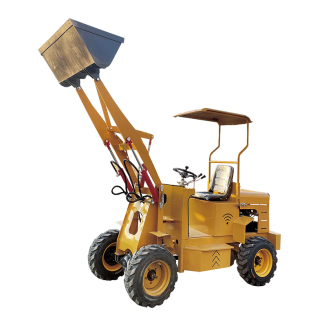
We offer eight major product series, including electric golf carts, electric sightseeing cars, skid steer loaders, and mini excavators. If your property also runs compact equipment, aligning documentation formats, packing expectations, and spare-parts planning with us can simplify training and long-term service.
A Simple Implementation Roadmap
- Build a Worksheet: Create a per-vehicle 5–10 year worksheet for electric golf cart lifecycle cost.
- Set Standards: Define battery and charging protocols to fit real routes and shift patterns.
- Require Verification: Insist on documented outgoing inspection and factory trial operations per batch.
- Secure Support: Confirm spare-parts support and lead times before the first shipment.
To review our specifications and configurations, visit our product page at www.katartrading.com.