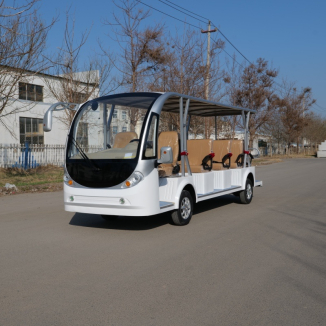
Stop Golf Cart Range Anxiety Without Compromising Battery Safety
Range anxiety represents a tangible operational cost for any golf cart fleet—whether managing resorts, gated communities, or rental operations. However, extending golf cart range requires more than just adding capacity; it involves designing a lithium system capable of maintaining stability under daily rigorous use: partial charging, scorching parking lots, constant vibration, and unpredictable driving habits.

What “Safer Long-Range” Means for a Golf Cart Battery
A long-range golf cart battery upgrade functions as a complete system decision rather than a single component choice. Modern configurations predominantly favor LiFePO4 chemistry, offering a practical safety margin alongside usable energy for light electric vehicles.
A direct comparison helps set realistic expectations:
| Topic | Lead-acid (typical legacy golf cart) | Lithium (typical upgrade golf cart) |
|---|---|---|
| Weight impact | Higher | Lower |
| Usable energy | More limited by voltage sag | More consistent output |
| Monitoring | Minimal | Requires BMS visibility |
| Protection needs | Basic | Electrical + thermal protections |
BMS is the Gatekeeper for Golf Cart Reliability

A battery management system (BMS) acts as a mandatory component in any lithium golf cart pack. Industry analysis of lithium systems confirms that the BMS handles critical roles including safety protection, state estimation, charge control, and fault handling. For practical golf cart applications, this specifically means:
- Over/under-voltage protection to prevent cell stress
- Over-current protection for hill starts and sudden acceleration
- Temperature monitoring to reduce thermal risk
Cell Balancing Prevents Range Fade Over Time
Cell-to-cell drift remains a known pack-level failure pathway. Balancing methods—whether passive or active—are essential for maintaining pack consistency. For a golf cart, superior balance translates to steadier range, fewer nuisance cutoffs, and more predictable charging behavior.
Thermal and Mechanical Design Matters as Much as Chemistry
Temperature strongly influences lithium performance and degradation, making thermal impacts a primary engineering focus. For golf cart duty cycles, buyers should look for evidence of:
- Robust heat paths (rather than just insulation)
- Sensor placement that accurately reflects real hot spots
- Mechanical retention that tolerates vibration (a critical concern in small EV platforms)
A Practical China Sourcing Checklist for Golf Cart Buyers
When evaluating a China supplier for a golf cart lithium pack, prioritize verifiable documentation over marketing claims:
- Architecture: Clear pack architecture description (series/parallel, nominal voltage class)
- BMS Clarity: BMS functions listed in plain language (protections + logging)
- Balancing: Balancing approach stated and justified (passive vs. active)
- Evidence: Basic test evidence (charge/discharge checks, temperature checks)