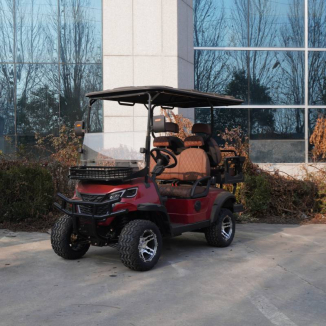
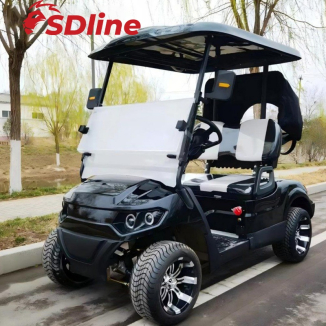
Audit ELECTRIC GOLF CATRS Before They Leave Any China Factory
Importing ELECTRIC GOLF CARTS from China can be a strategic commercial move—until a hidden weld defect, inconsistent torque, or incomplete battery paperwork turns a profitable shipment into claims, delays, or recalls. The most effective method to buy ELECTRIC GOLF CARTS is to confirm that the factory runs a rigorous end-to-end quality control system: IQC → IPQC → FQC → PSI, backed by verifiable serial-level test records.

Why End-to-End QC is the Difference Between Savings and Risk
Most field issues in ELECTRIC GOLF CARTS typically trace back to four core systems: frame integrity, drivetrain, electrical controls, and battery safety. A documented, transparent workflow helps a Golf Cart China Factory achieve the following:
- Stop nonconforming materials before they enter production (IQC)
- Keep welding, painting, and assembly processes stable (IPQC)
- Verify every single unit at the end-of-line (FQC)
- Ensure export readiness immediately before loading (PSI)
For buyers working with a China electric golf cart manufacturer, this systematic approach is also what supports customs checks and market surveillance in regulated markets like the EU, UK, and US.
Supplier Control and IQC That Prevents Downstream Rework
A robust ISO 9001-based system starts with upstream discipline. You cannot build a premium vehicle from substandard parts. For ELECTRIC GOLF CARTS, incoming inspection (IQC) typically requires:
- Material certificates for steel/aluminum frames to ensure structural rigidity.
- Lot test data for battery cells to guarantee consistent energy density.
- Certificates of Inspection (COIs) for wiring harness suppliers.
- Calibrated torque tools and controlled fastener specs to prevent assembly failures.
IQC acceptance should be tied to defined criteria for dimensions, strength, and corrosion protection—not simply because the components "look OK."
IPQC Focus Areas for Battery Safety and Electrical Reliability
Battery packs represent the highest-risk component in ELECTRIC GOLF CARTS. Ensuring their safety is non-negotiable.

Before shipment, request recent reports (commonly within the last 12 months) covering:
- UN38.3 transport safety standards.
- IEC 62133 cell/module safety specifications.
- MSDS and cell manufacturer datasheets.
- Proof the testing lab is ISO/IEC 17025 accredited.
On the production line, IPQC should also verify weld appearance (including NDT sampling when required), paint thickness, harness routing, connector locks, and torque audits with clear CAPA (Corrective and Preventive Action) rules.
FQC, PSI, and Traceability Buyers Can Actually Verify
How do you ensure the finished product meets your standards? For ELECTRIC GOLF CARTS, a practical approach involves:
- AQL 0 for critical safety items (Zero tolerance for safety risks).
- AQL 1.5–2.5 for major defects.
- AQL 4.0 for minor defects.
Crucially, ask for MES traceability. This should show the data trail: serial number → process checkpoints → end-of-line logs (EMC mapping where applicable, insulation resistance, leakage current, braking/steering, endurance cycles) → shipment serial mapping. This data ensures that if an issue arises, you can pinpoint the exact cause.
What to Request Before You Release Payment
To protect your investment, ensure you have the following before authorizing the final balance:
- Battery document pack (UN38.3, IEC 62133, MSDS, ISO/IEC 17025 proof) specifically for the configuration used in your ELECTRIC GOLF CARTS.
- An audit plan centered on battery assembly and traceability protocols.
- Contracted AQL levels and a written PSI scope.
- EOL test logs and serial mapping as a mandatory shipment-release condition.
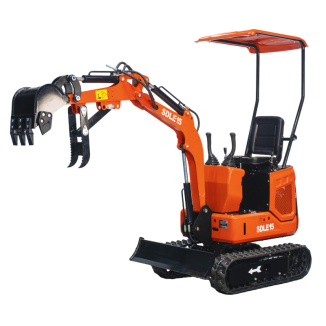
If you want a buyer-ready checklist for evaluating a Golf Cart China Manufacturer—and note that this same inspection structure can also be adapted for verifying a Mini Excavator China Factory or Skid Steer Loader China Factory—reach our team at sales@[yourdomain].com or use our contact page.